
Born on Easter
A Founder's Guide to Spring as Spiritual Practice

I was born on Easter Sunday.
Not metaphorically. Literally.
And when I turned eleven — Easter Sunday again. When I turned twenty-two — Easter Sunday. Dates that kept finding me, circling back, insisting.
I stopped calling it coincidence a long time ago.
I am not a religious person, but I am deeply spiritual. I believe cycles hold wisdom. I believe in the power of intention in ritual and seasons. I believe that the earth holds a kind of intelligence that most of us have been trained to ignore.
And I believe that being born on Easter Sunday — the day the world collectively marks as a moment of death becoming life, of endings folding into beginnings — shaped something in me that I am still unfolding.
This essay is for the women who feel the season shift in their bones before the calendar tells them. For the founders who are exhausted from performing productivity in winter conditions. For anyone who has ever felt a deep, wordless pull toward tulips, toward bonfires, toward bare feet on cold ground that is somehow already warming.
Spring is not a metaphor.
It is a permission slip.
Let me explain.
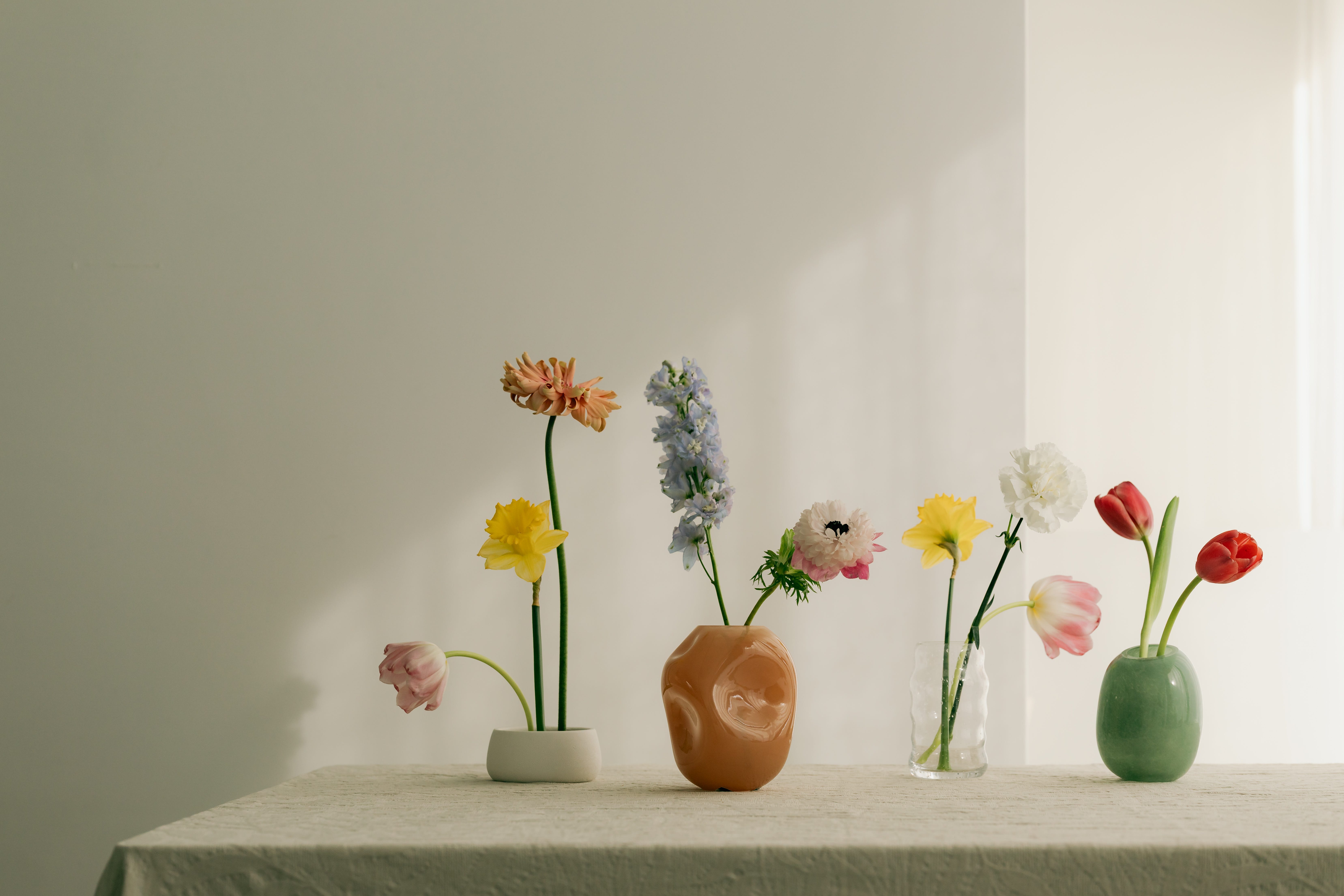
I. Before Easter, There Was Ostara
Long before the Christian story of resurrection, there was a spring goddess whose name we have largely forgotten.
Eostre. Also known as Ostara.
The 8th-century monk Bede recorded her name, noting that the Anglo-Saxons held a festival in her honour each spring — a festival so beloved, so deeply embedded in the people, that when Christianity spread across Europe, the missionaries did not eliminate it. They absorbed it. The word ‘Easter’ itself descends directly from Eostre’s name, rooted in the Proto-Germanic ‘austrōn,’ meaning dawn.
Dawn. The moment of first light. The turning point.
Ostara is celebrated at the spring equinox — that precise astronomical moment when day and night are in perfect balance. Equal light. Equal dark. A held breath between what was and what is becoming.
The Spring Equinox is not just a seasonal marker. It is the earth demonstrating, in real time, that balance is possible — and that it is always followed by expansion.
The symbols of Ostara are the symbols of Easter: eggs, hares, flowers, fire. These are not Christian inventions. They are ancient fertility symbols — eggs as the promise of new life, hares as the most notoriously fertile creature in the animal kingdom, flowers as the earth declaring herself open again.
Modern pagans and Wiccans celebrate Ostara through rituals of planting seeds, decorating eggs, and setting intentions for the season of growth ahead. It is one of eight sabbats on the Wheel of the Year — the second of three spring festivals, sitting between Imbolc (the first whisper of spring) and Beltane (the full roar of summer).
What I love most about Ostara is its quality of balance before acceleration. It does not ask you to be fully bloomed. It asks you to acknowledge the light that is returning. To plant. To breathe. To trust the underground work that is already happening.
For founders, for mothers, for women running businesses on nervous systems that have been in overdrive — Ostara is an invitation to exhale.
The light is coming back. You don’t have to rush it.
Further reading: Ostara: Rituals, Recipes & Lore for the Spring Equinox by Kerri Connor (Llewellyn Publications, 2015)
II. Beltane: When the Earth Says Yes
If Ostara is the exhale, Beltane is the f*ck yes.
Celebrated on the first of May — the midpoint between the spring equinox and the summer solstice — Beltane is the ancient Gaelic fire festival marking the beginning of summer. One of the four great Celtic seasonal festivals alongside Samhain, Imbolc, and Lughnasadh, it is arguably the most electric.
The word Beltane translates as ‘bright fire.’ And fire is everything here.
Ancient Celtic communities would extinguish every hearth fire in the village on Beltane eve. Then, on the hilltops, druid priests would kindle a sacred flame — obtained, the stories say, from the sky itself. That sacred fire was used to relight every home, every hearth, connecting the entire community through a shared flame. Every family’s warmth, every family’s light, connected to a single source.
Livestock were driven between two bonfires — the smoke believed to purify and protect them for the coming season. Couples leapt over the flames together, pledging themselves to one another in handfasting ceremonies for ‘a year and a day.’ The fire was not just celebration. It was medicine. It was protection. It was intention made visible.
To leap the Beltane fire was, in the old understanding, to take the flame inside yourself. The light of life and sun, carried forward into your body and your work.
Beltane is the energy of desire without guilt. Creative output without permission. The earth at full fertility, committing unapologetically to bloom.
For those of us who have spent years shrinking our wanting — minimizing our ambitions, apologizing for our needs, performing modesty as a survival strategy — Beltane is a radical invitation.
Want loudly. Create boldly. Bloom on purpose.
This is not recklessness. It is alignment. It is what your nervous system has been moving toward through the long, patient underground work of winter and early spring.
Today, the Beltane Fire Festival in Edinburgh draws thousands to Calton Hill every April 30th — a modern reinterpretation of an ancient ritual, led by the May Queen and the Green Man, pulsing with drums and fire and the particular joy of communities remembering that they are alive together.
You don’t need to be in Edinburgh. The energy is available wherever you are.
Further reading: history.com/articles/beltane — HISTORY’s overview of Beltane’s origins and traditions
III. Aries Season: The Pioneer
On top of all of this — the ancient festivals, the equinox light, the fire — we are also in Aries season. Where are my fellow Aries at?
Aries is the first sign of the zodiac. Cardinal fire. The initiator. The one who goes first so others can follow.
Aries does not wait for perfect conditions. Aries does not wait for permission. Aries does not wait.
The Aries archetype — whether you follow astrology or simply use it as a lens for understanding energy cycles — is the energy of courage in motion. The pioneer who moves into uncharted territory not because they are fearless, but because they have decided that forward is better than standing still.
This lands particularly for female founders.
We are often taught to wait. To build more evidence. To soften the edges of our vision until it’s palatable enough to present. To perform readiness before we are ready.
Aries season asks something different: what if you moved before you had all the answers? What if the first step was enough to earn the second?
Aries energy does not eliminate doubt. It simply refuses to be governed by it.
Combined with Ostara’s balance and Beltane’s fire, Aries season makes this one of the most generative, initiating windows of the entire year. If you have been incubating something — a business idea, a creative project, a decision about your own life — this is the season that has been waiting for you.
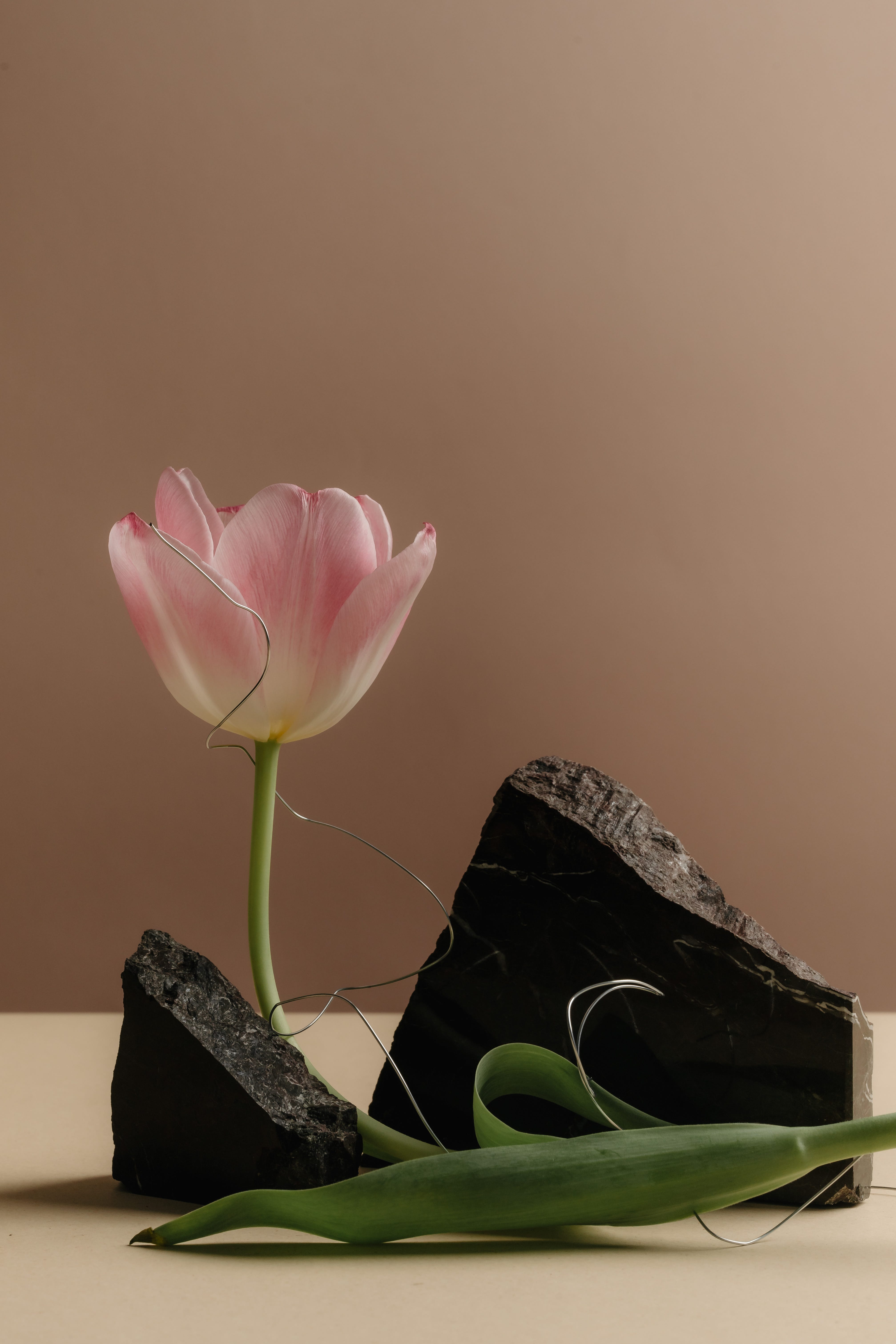
IV. The Tulip
I need to tell you about tulips.
I have always been obsessed with them. Tulips. Simple. Declarative. One perfect cup of colour on a clean stem.
Tulips originated in Central Asia, blooming wild across the mountains of Kazakhstan and beyond. The Persians cultivated them first, incorporating the tulip into poetry and art as a symbol of paradise, of abundance, of perfect love. A 12th-century Persian poem tells of a young prince, Farhad, who loved so completely that when his love died, red tulips grew from the earth where his tears fell.
The Ottoman sultans were obsessed with tulips — so much so that the wealthiest era of the Ottoman Empire is known as the Tulip Era, the Lale Devri. The Turkish word for tulip is ‘lale,’ which in Arabic script uses the same letters as ‘Allah.’ The tulip became a symbol of the divine.
In the Netherlands, tulips caused the world’s first recorded speculative bubble in the 17th century — Tulip Mania — when rare bulbs sold for more than the price of a house. The Dutch loved tulips to the point of financial ruin, and they have never really stopped.
During the Dutch famine of 1944-45, when food was desperately scarce, the Dutch ate tulip petals and bulbs to survive. The petals are edible — mild, slightly sweet, with a crisp texture. They have been used in salads, candied as desserts, infused into syrups and elixirs.
A flower that has survived empires, manias, famines, and centuries of obsession. A flower that is both ornament and nourishment. That declares itself in early spring before it is entirely safe to do so. That is the tulip. That is the energy.
White tulips symbolize purity and forgiveness. Purple, royalty and admiration. Red, perfect love — the eternal kind, the Farhad kind. Pink, affection and care.
I don’t think it’s an accident that my favourite flower is one that blooms early, before the frost is entirely gone, before the earth has fully warmed. Tulips go first. They trust the season before it has fully arrived.
That is the assignment.
A Spring Ritual: Tulip Honey Elixir
In honour of the tulip — its beauty, its resilience, its surprising edibility — here is a morning elixir for this season. It is simple, plant-based, and genuinely nourishing. Make it as a ritual. Make it slowly. Let it be the first intentional thing you do today or this weekend.
Note: Use only unsprayed, food-grade tulip petals. If you’re uncertain of the source, edible rose petals work beautifully as a substitute.
Ingredients (serves 1)
– 4–6 fresh tulip petals (unsprayed), rinsed gently
– 1 tbsp raw honey (or maple syrup to keep it fully plant-based)
– Juice of half a lemon
– 1 cup warm water (not boiling — around 70°C/160°F)
– Optional: a small pinch of dried lavender or fresh mint
Method
1. Place your tulip petals in a mug or small bowl. Take a moment to notice their colour, their texture. This is the ritual part.
2. Pour the warm water over the petals. Let them steep for 3–4 minutes. The water will take on a faint colour and a delicate floral fragrance.
3. Stir in the honey until dissolved. Add the lemon juice.
4. Strain into your favourite mug, or drink with the petals floating — they are edible and beautiful.
5. Optional: add a pinch of lavender or a few mint leaves for complexity.
6. Drink slowly. Outside if you can. Let the season come to you.
This is a drink for mornings when you want to begin intentionally. When you want to mark the season. When you need to remember that nourishment can be beautiful, and beauty can be nourishing.
V. The House of Rabbits
There is one more thread I have never fully spoken out loud until now.
For fifteen years, I lived in Tuxtla Gutiérrez, Chiapas — the city where Altavita’s essences was seeded, and is the first stop on our retreats. It is the landscape that shaped my understanding of healing, the importance of deep cultural roots, and nature as medicine. I moved there without knowing what the name meant. The Zoque people, who first settled that valley, called it Coyatoc — the house of rabbits. When the Aztecs arrived, they renamed it Tochtlán — which means the same thing in their language. The Spanish eventually softened the word into Tuxtla. I lived in the house of rabbits for fifteen years before I knew it.
Now I live in Calgary again, where urban rabbits are everywhere — darting across lawns, sitting still in the early morning light, appearing with a regularity that feels almost deliberate. And every Easter, the rabbit returns to the centre of the holiday — not as a commercial invention but as one of the oldest symbols of Ostara, of spring, of abundance and new life.
I didn’t choose the rabbit. The rabbit chose the geography of my life. Tuxtla. Calgary. Easter. The symbol of abundance keeps finding me, keeps surrounding me, keeps living in the name of the place I called home — long before I thought to look for it.
I think that’s what spiritual awareness actually is. Not seeking signs. Tapping in. Turning around one day and realizing they were always there.
VI. The Claim
I was born on Easter Sunday.
And every year, without planning it, without consciously choosing it, I feel this season differently than I feel other seasons. Something in my body knows. Something in the cells that were formed in late winter and emerged into a world celebrating rebirth — something in there recognizes the energy.
Honestly, many of us feel more ‘new year’ energy in spring than in the dead of winter.
Maybe you feel it too. Maybe you have always felt it and didn’t have language for it. Maybe you thought it was just springtime restlessness, or ambition, or anxiety, or hope.
What if it was information?
What if your body has been tracking the seasons all along — the underground work of winter, the first exhale of Ostara, the fire of Beltane, the forward momentum of Aries — and it has been waiting for you to pay attention?
This is your season. Not because the calendar says so. Because you have been doing the invisible work. Because you understand cycles now. Because you have chosen your flower and you know what it means.
The tulips are blooming early.
The fire is available.
The light is tipping toward abundance.
Are you going to answer it?
If this resonated, I’d love to know.
What season are you in right now — in your body, in your business, in your life?
Drop it in the comments. I read every one.
— meganswanwellness.com | @meganswanwellness —
Sources
Ostara / Spring Equinox
Mental Floss — 6 Facts About Eostre, the Spring Equinox Goddess Shrouded in Mystery https://www.mentalfloss.com/holidays/eostre-and-ostara-facts
Moonfall Metaphysical — Ostara 2026: Meaning, Traditions, Rituals & Spring Equinox Magic https://moonfallmetaphysical.com/s/stories/ostara/
Learn Religions — The History of Ostara, The Spring Equinox https://www.learnreligions.com/history-of-ostara-the-spring-equinox-2562485
Wicca Living — Ostara (Spring Equinox) – The Wiccan Calendar https://wiccaliving.com/wiccan-calendar-ostara-spring-equinox/
Canton Public Library — Celebrate the Spring Equinox and Ostara https://www.cantonpl.org/blogs/post/celebrate-the-spring-equinox-and-ostara/
Beltane
HISTORY — What Is the Ancient Celtic Festival of Beltane? https://www.history.com/articles/beltane
National Geographic — What is Beltane? Inside the ancient pagan ritual still celebrated today https://www.nationalgeographic.com/history/article/beltane-pagan-fire-festival
Beltane Fire Society — About Beltane Fire Festival https://beltane.org/about-beltane/
Ancient Origins — Beltane: Celtic Fire Festival Beckons with the Warmth of Summer https://www.ancient-origins.net/history-ancient-traditions/beltane-0011844
Tulips
Wikipedia — Tulip (symbolism, edibility, Ottoman history, Dutch famine) https://en.wikipedia.org/wiki/Tulip
BloomsyBox — Exploring Tulip Symbolism Across Cultures and History https://www.bloomsybox.com/blog/posts/tulip-symbolism-across-cultures-a-global-perspective
Petal Republic — Tulip Flower Meaning, Symbolism, and Cultural Significance https://www.petalrepublic.com/tulip-flower-meanings/