
The Mental Capacity Argument for AI
I Hit Send. Then I Go to Cook Dinner. That's the Real AI Wellness Argument.

I want to tell you something I’m slightly embarrassed to admit.
Most of the female founders I coach have multiple computers running simultaneously all day long. They’re deep in the tech stack. They live in the data. They speak in acronyms I’m learning in real time, even as I’m the one sitting across from them talking about nervous system regulation and funding mindset and the cost of operating from a chronic stress response.
I’m on my phone and my laptop. That’s it. That’s my whole setup.
And for a long time, I told myself that was fine — that my edge was the human work, the depth of conversation, the sobriety and the embodied experience and the decade and a half in Chiapas I carry into every coaching container. All of that is true. None of that has changed.
But something else has also become true: the founders I work with are moving fast. AI is not coming — it’s here, and it’s compounding. I came across a piece of advice a while back that stopped me: if you’re not spending at least an hour a day learning AI as a tool, you’re going to fall behind fast — because it’s moving too quickly to catch up later.
I felt that. Not as a threat. As a wake-up call.
So I started. An hour a day, some days more. Not building software. Not learning to code. Just learning to use AI the way I use any other tool — in service of the work I’m already doing, the brands I’m already building, the clients I’m already serving.
And what happened surprised me.
A quick note on where I’m at — because honesty matters here.
I want to be clear about something before I go any further: I am a beginner-to-intermediate AI user, at best.
I know that. I’m self-aware about it. And I hold it alongside the fact that I am watching my most tech-savvy clients do things with AI that genuinely blow my mind — automating entire workflows, building custom tools, integrating systems I haven’t even heard of yet. They are doing a hundred times more with this technology than I am.
But I also know this: you have to walk before you run. And the walking is worth doing.
My current AI stack is simple:
Claude — for writing, content strategy, brand voice, curated guided hypnosis scripts, document + pitch deck creation, graphics, and thinking out loud. This is my primary tool and where I spend most of my time. I’ve only built out a dozen or so ‘skills’ on it so far.
Boardy.ai — for intros, meeting prep, business strategy + ideas.
Notion — as my publishing and content management layer (with Claude helping me keep it up-to-date).
Castmagic + Opus — for all my podcasting notes, emails, social media captions, clip edits + scheduling to YouTube shorts.
Perplexity — for deep dive research.
Next to tackle is email - a founder friend shared on her socials a few weeks ago a mega prompt she took 2 hours on gemini to create that I will eventually implement.
That’s mostly it. I am not running automations. I am not using ten tools. I am learning one thing at a time, building fluency slowly, and trusting that compound interest applies here too.
The hour-a-day advice? It’s real. I don’t always hit it. But the weeks I do, I feel the difference — not just in output, but in confidence. In feeling like I’m participating in something rather than watching it pass me by. I feel excited + empowered.
Btw, was at a conference here in Calgary last year, where I met one of the local AI experts - she is running courses, which I will hopefully be able to take later this year…point is she said something that really stuck with me:
“women are uniquely positioned to leverage AI because for the first time ever, you can build your intuition and life experience into the spreadsheet”
In other words, before AI, there would be a hesitation in the business world to you communicating that you have an instinct or a good sense around something. Now you can actually build it into the deliverable that you are sharing.
If you’re where I was six months ago (Jose’s been using ChatGPT for as long as it has been around and was ahead of the curve for example) — a little intimidated, a little behind, wondering if this is even for you — I want you to know: it is.
Start small. But start now. Stay consistent. The gap closes.
The productivity argument isn’t the interesting one.
Yes, I’m faster. Yes, I’m producing more. Yes, a solo founder with one phone and one laptop can now do things that used to require a team or weeks in hours.
Everyone is making this argument. It’s true. And it’s also the least interesting thing about what’s actually happening.
Here’s what nobody is talking about: what you do with the time AI gives back to you.
Because here’s what I’ve noticed about myself in the months I’ve been doing this. I hit a prompt. I press enter. And then — I go cook a meal.
I fold laundry in silence.
I step outside and walk around the block without my phone.
I just... stop.
Not because I’m lazy. Not because I’ve checked everything off the list. But because something in my body recognizes that the task is being handled — and it finally lets me exhale.
The nervous system case for doing nothing while AI works.
Let me put on my wellness strategy hat for a second, because this is actually the part I find most fascinating from a somatic standpoint.
Most of us — especially founder-types — have trained our nervous systems to equate downtime with danger. If we’re not producing, we’re falling behind. If we’re not visible, we’re being forgotten. Rest is something we earn, not something we take.
So we fill every gap. Every loading screen, every Zoom waiting room, every two minutes between tasks — we fill it with our phone, with email, with a voice note to ourselves about something else we need to do.
We have optimized the white space out of our days entirely. And we wonder why we’re exhausted.
AI, quietly, is giving some of that white space back.
Not always hours. Sometimes minutes. But minutes of genuine permission to stop — because the work is literally in progress without you. You pressed send. Something is happening. You don’t need to manage it.
That pause? That is not wasted time.
That is your nervous system being offered something it is profoundly hungry for: a moment where nothing is required of it.
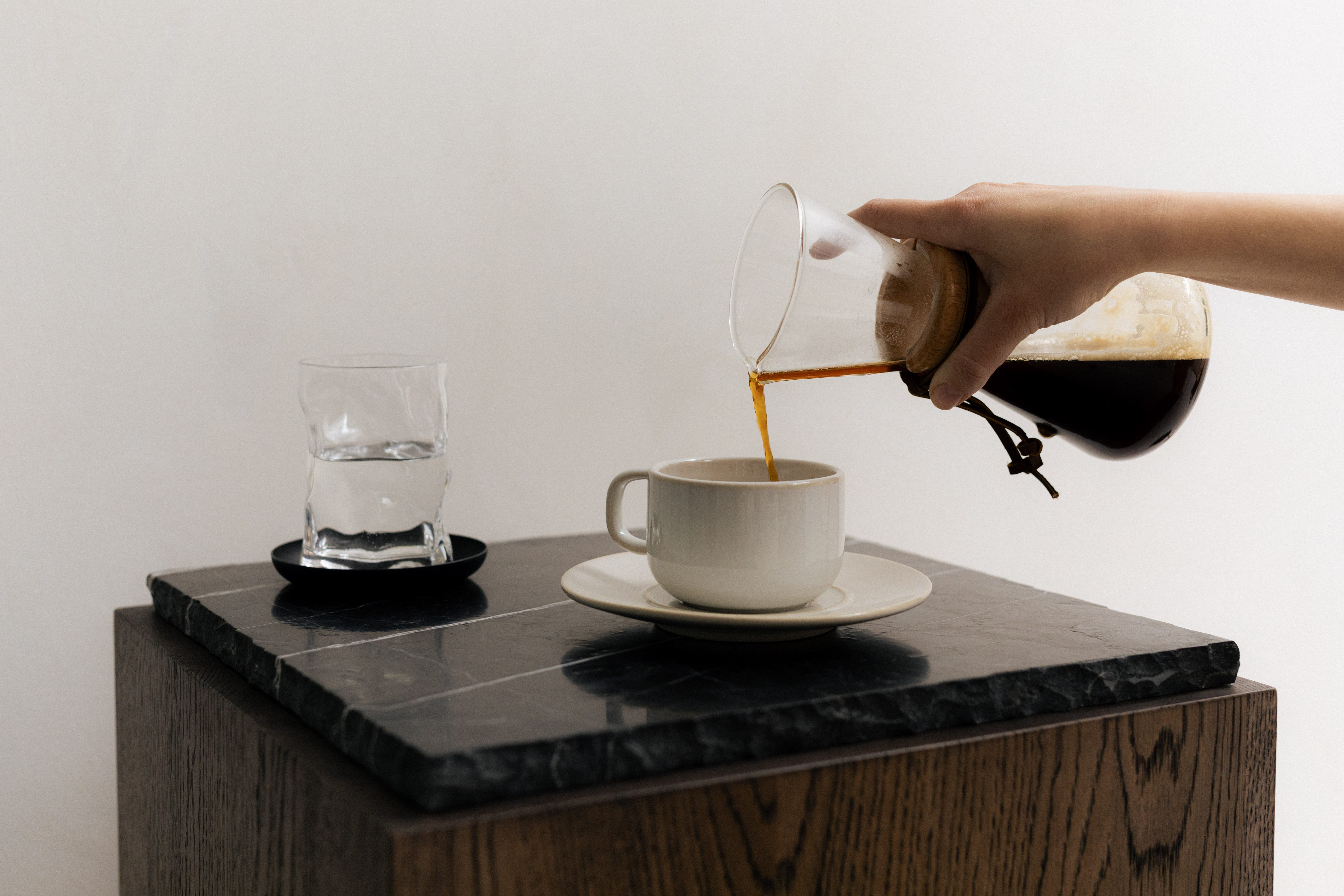
What I do while AI works.
I want to be honest about this, because I think there’s a version of this essay that would tell you to use that time to meditate or journal or do something intentional and optimized.
That’s not what I’m suggesting.
What I actually do:
I cook. I’ve been making more real food since I started using AI heavily — not because I have more time, technically, but because I’ve started letting the gaps be gaps instead of filling them.
I fold laundry. In silence. Not listening to a podcast, not on a call, not half-present. Just folding. There is something almost meditative about a task that only requires your hands.
I go for a walk. Sometimes just around the block. Sometimes longer. My phone stays on the counter.
I sit on my balcony and look at nothing in particular.
I slow down.
And I want to say something clearly here: I am not doing these things to become more productive. I am not recharging so I can go back and output more. I am treating rest as a strategy.
I am doing these things because they are good for me. Because my body asked for them. Because being a human being, not just a human doing, is something we have to actively practice these days — and AI, strangely, is helping me do it.
The counter-cultural take.
Every AI conversation in the entrepreneurship space is about leverage. Output. Scale. Do more with less. Ten X your productivity. Build the team you can’t afford yet.
I believe in all of that. I am living proof of it as a solo founder running two businesses.
But I want to offer a different frame — one that I think is more aligned with why most of us started building in the first place.
What if the point of getting faster wasn’t to do more?
What if it was to have more room to be a person?
What if the margin AI creates — even if it’s ten minutes — was yours to spend on something completely, unapologetically unproductive?
I have been sober for over eight years. One of the most important things sobriety taught me was that I was using alcohol to transition — between work and home, between high-stakes and ordinary, between output and rest. I needed a substance to help me shift states because I had no other way to do it.
I’m not saying AI is a replacement for that. But I am saying: the pause it creates can be. If you let it.
Hit send. Step away. Let the machine do the thing it’s good at.
And while it works — go do something that has nothing to do with your business.
Go be the person your business is supposed to be serving.
A practice, if you want one.
Next time you send a prompt — whether it’s to Claude, to whatever tool you use — don’t open another tab.
Don’t check Instagram.
Don’t start the next thing.
Set the phone face-down and do one of these:
Make a cup of tea and drink it without looking at anything.
Step outside for three minutes.
Do one small physical task — dishes, folding, watering a plant.
Sit in silence and let your mind wander.
Not because it will make you more productive - although it will! Because you are allowed to rest in the middle of the day. Because your nervous system is not a machine, even if you’re learning to work alongside one.
Because this is what wellness as a way of life actually looks like — not a retreat you attend once a year (although those help too, wink, wink), but a hundred small moments every day where you choose your humanity over your output.
AI can hold the task. You get to go be a person.
Megan Swan is a wellness strategist, coach, and the founder of Megan Swan Wellness and Altavita. She writes about nervous system regulation, sober entrepreneurship, and what it actually takes to build something sustainable. Subscribe to Wellness Infrastructure for more.